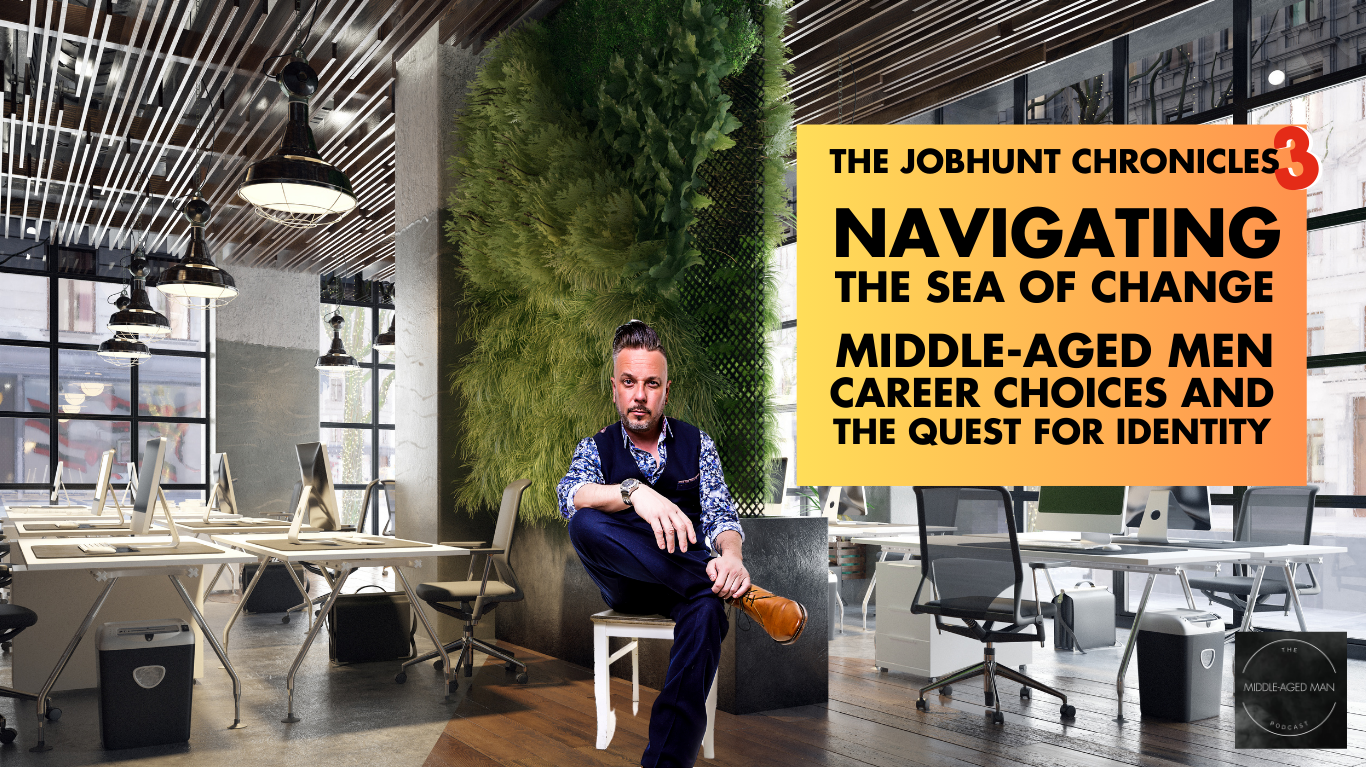
In the grand tapestry of life, our careers are often intricately woven into our identities. For middle-aged men, contemplating a shift in this well-established narrative can be both exhilarating and daunting. As a card-carrying middle-aged business expert, I invite you to embark on a journey of self-discovery, exploring the psychological impact of choosing a new career path or having that choice thrust upon you.
The Comfort of Familiarity
Picture this – you’ve spent decades climbing the corporate ladder, mastering the nuances of a specific industry. Your identity is intertwined with your profession, and your status is established. Now, the prospect of a new career beckons. How does this departure from familiarity impact your psyche?
Choosing a new path is akin to stepping into uncharted territory. It’s normal to feel a mix of excitement and trepidation. The psychological impact can range from the thrill of reinvention to the sheer terror of uncertainty. This transition challenges not only what you do but also who you perceive yourself to be.
Forced Change and the Identity Quake
On the flip side, circumstances beyond our control sometimes force career changes – perhaps due to layoffs, industry shifts, or unforeseen life events. (This has happened to me more than once, sadly) In these instances, the psychological impact can be profound. The abrupt disruption of your established identity can lead to a sense of loss, confusion, or even a total identity crisis.
Consider the story of Mark, a successful advertising executive in his mid-40s. His company underwent a restructuring, and he found himself out of a job. The sudden shift left him grappling with questions of self-worth and purpose. Mark’s experience reflects the psychological turbulence that can accompany an unexpected career change. And it’s natural because to him it shook everything he thought he knew he was, to its core.
Navigating Societal Expectations and Stereotypes
Society often casts a large, dark and derisory shadow on middle-aged individuals contemplating career changes. The notion of the “midlife crisis” persists, perpetuating stereotypes of impulsive decisions and reckless pursuits. It’s essential to recognise and challenge these stereotypes, understanding that a career change is not an erratic whim but a thoughtful and strategic decision.
Meet John, a middle-aged software engineer who decided to pursue his passion for environmental sustainability. While some questioned the timing of his decision, labelling it as a midlife crisis, John saw it as a purposeful shift toward a more fulfilling career aligned with his values. His story illustrates the importance of breaking free from societal expectations and embracing autonomy to shape our professional narratives.
Another stereotype that often rears its head is the assumption that middle-aged individuals may struggle to adapt to rapidly evolving technology in new career endeavours.
I do need to caveat this with my position that I do believe we all get to an age where new tech at some point does bemuse us. I left home at 18 and my parents waited for me to come home to change the clock on the video recorder, or point out to my father that “R’ on the Sky Remote meant ‘Record’ and not ‘Remind’, which led 28 weeks worth of Soccer Saturday being store on the hard drive.
This myth overlooks the wealth of experience and wisdom that can be seamlessly integrated into various roles.
Take the example of David, a middle-aged marketing professional who transitioned to a digital marketing role. His years of strategic thinking and understanding of consumer behaviour were assets that complemented his newfound digital skills. David’s story underscores the importance of leveraging existing expertise in a new context, debunking the myth that age hinders tech adaptation.
Overcoming Psychological Hurdles
Embracing a growth mindset is pivotal during career transitions. Recognise that your skills and abilities can evolve with effort and learning. Instead of viewing challenges as threats to your identity, see them as opportunities for growth. This shift in mindset can foster resilience and adaptability.
Consider Robert, a middle-aged finance professional who decided to pursue a career in data analytics. Initially intimidated by the technical aspects, he cultivated a growth mindset, viewing each obstacle as a chance to learn. Over time, he not only mastered new skills but also discovered a newfound sense of accomplishment and confidence. The growth mindset aided Robert in becoming unstoppable.
Now remember your career journey is unique, and so is your narrative. In interviews and networking situations, you should articulate your career transition story with authenticity and confidence. Highlight the transferable skills gained over the years and the lessons learned from your diverse experiences. Your narrative should be a powerful testament to the value you bring to the table.
Meet James, a middle-aged architect who shifted gears to become a project manager in the renewable energy sector. During interviews, he artfully wove his architectural background into a narrative of problem-solving, attention to detail, and creativity – qualities highly sought after in project management. Crafting a compelling narrative helped James transcend age-related biases and secure a fulfilling role in his new career.
Building a Support System
In times of career transition, the support of family and friends becomes invaluable. To my detriment, I never did quite get this, but now I fully understand the benefits of this far outweigh the fragile ego. Share your aspirations and concerns with your loved ones. Their encouragement can provide emotional sustenance and help you navigate the emotional landscape of change.
Consider Richard, a middle-aged lawyer transitioning to entrepreneurship. His family became his sounding board, offering insights, encouragement, and the occasional reality check. Their unwavering support became the anchor that steadied him through the uncertainties of starting a business.
Seeking guidance from career coaches and mentors can provide invaluable insights and perspective. These experts can help you identify your strengths, navigate challenges, and develop a roadmap for your career transition.
Imagine Simon, a middle-aged marketing executive seeking a shift to the nonprofit sector. His mentor, a seasoned nonprofit leader, provided guidance on sector-specific nuances, and networking strategies, and even introduced her to key contacts. With her mentor’s support, Simon successfully navigated the transition and found fulfilment in his new role, (of which he’s absolutely kicking arse!).
Joining online community resources and support groups tailored to career changers can be a game-changer. These forums provide a platform to share experiences, exchange advice, and build a network of like-minded individuals on similar journeys.
Meet Michael, a middle-aged IT professional exploring a career shift into teaching. Engaging with online forums and local meet-ups for career changers allowed him to connect with educators who had successfully made similar transitions. The shared experiences and advice from this community served as a valuable resource throughout his journey.
Embracing the Next Chapter
In the realm of career changes, middle age is no longer a barrier; I believe it’s an opportunity. The psychological impact is very real, but with the right mindset, support systems, and proactive strategies, you can navigate this sea of change and emerge stronger on the other side.
Your identity is not static; it’s a mosaic that can evolve and transform. As you contemplate a new career path, remember that your worth extends beyond your job title. Embrace the journey, celebrate your strengths, and view each challenge as a stepping stone toward a more fulfilling professional identity.
In the end, the most remarkable careers are not those that follow a linear trajectory but those that embrace change, adapt to challenges and redefine success on their own terms. So, fellow middle-aged men, as you stand at the crossroads of change, know that the canvas of your career is ready for a masterpiece – one that reflects the authenticity, resilience, and wisdom that define the unique chapter of your professional story.
So here’s to you, the middle-aged maverick rewriting the rules, facing setbacks with a wink, and proving that the best is yet to come. Cheers to the next chapter, where age is an asset, resilience is your superpower, and every interview is an opportunity to showcase the brilliance of a career well-lived. Onward, upward, and always seasoned to perfection!