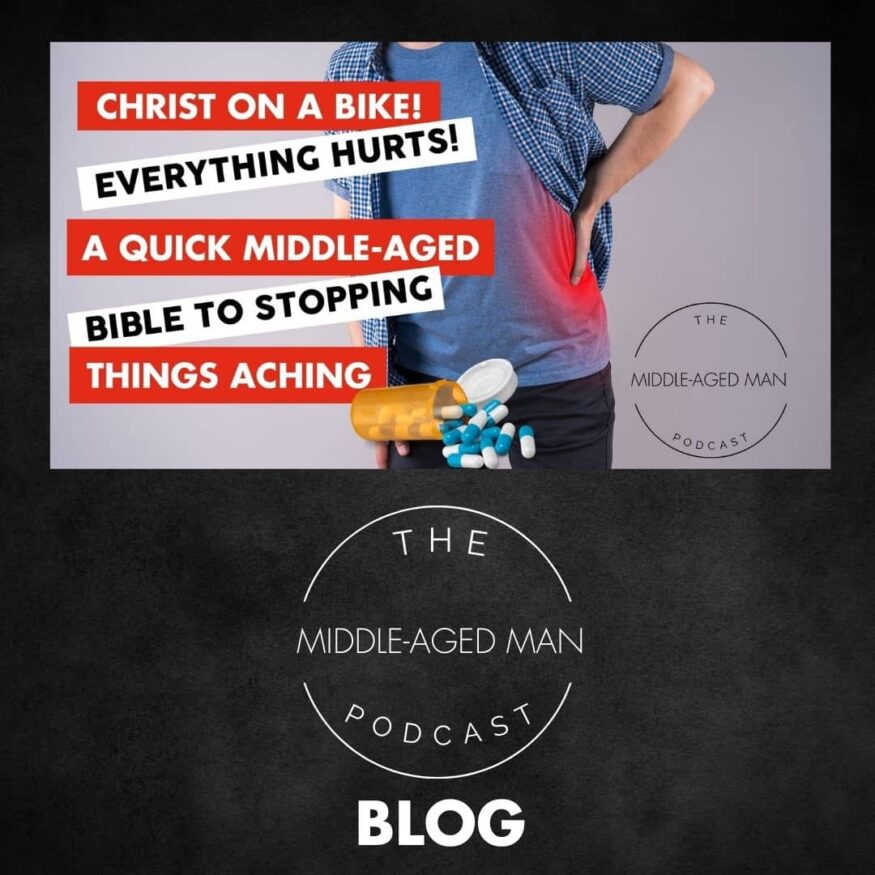

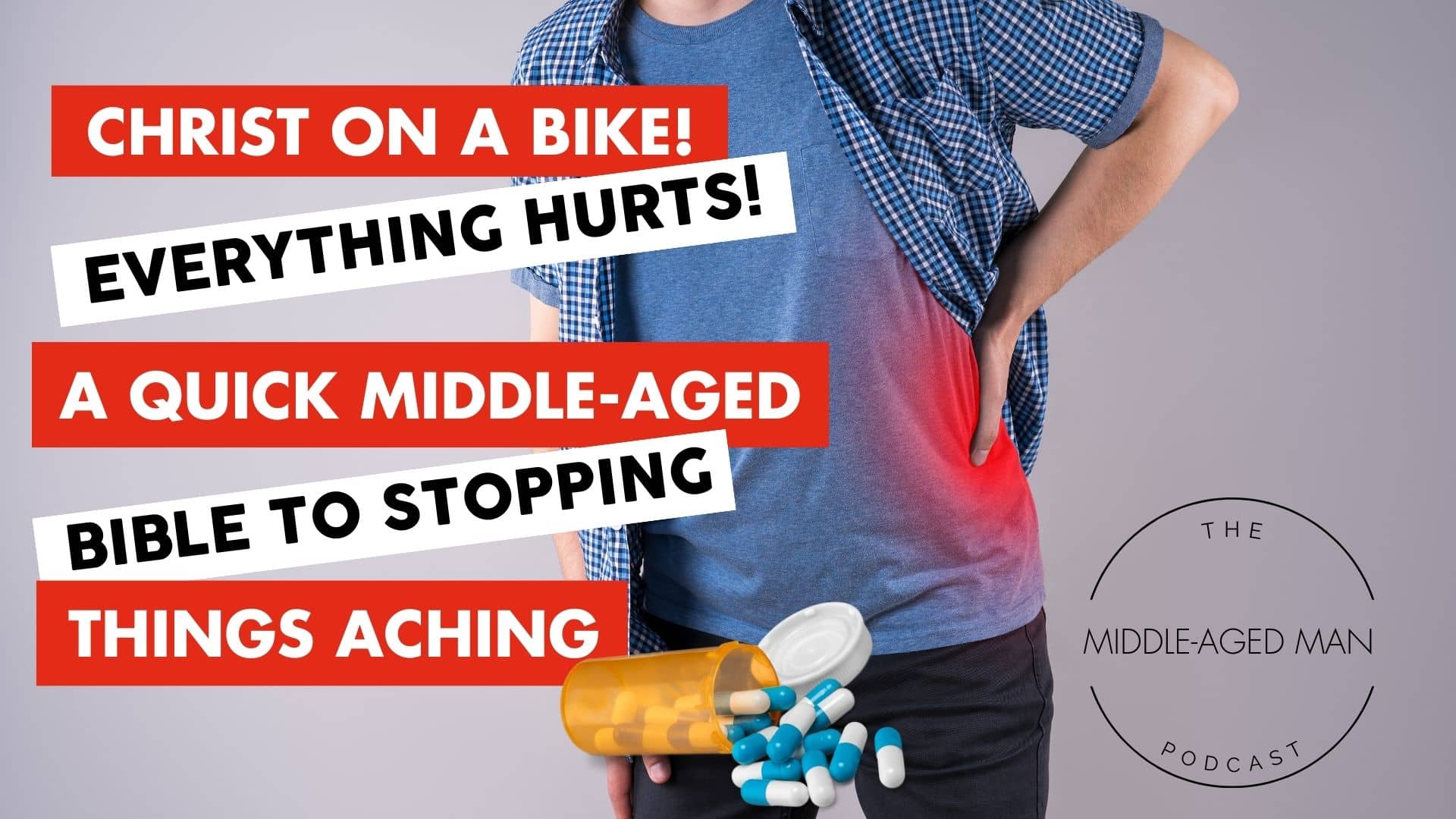

Christ on a Bike! Everything Hurts - A Quick Middle-Aged Bible to Stopping Things Aching
Written by Marc Ford
CHRIST ON A BIKE! Everything Hurts! A Quick Bible to Stopping Things Aching! a blog written by Marc Ford for The Middle-Aged Man Podcast

Welcome to “Christ on a Bike! Everything Hurts – A Quick Middle-Aged Bible to Stopping Things Aching.” If you’re reading this, chances are you’ve woken up one too many times wondering why everything hurts and why your body has suddenly decided to stage a mutiny. Well, you’re not alone, and it’s time to embrace the amusement and reality of middle-aged aches.

This blog is here to provide practical, yet tongue-in-cheek advice to help alleviate those common aches and pains that seem to have appeared out of nowhere. Let’s face it, we’re at an age where getting out of bed can sound like the sound effect of a bowl of Rice Krispies with all the snap, crackle, and pop happening in our joints. But don’t worry, we’re in this together, and there are ways to keep our bodies from feeling like they’re twice as old as we are.

We’ll be sharing light-hearted, relatable stories coupled with educational content. Think of it as your go-to guide for navigating the minefield of middle-aged ailments with a smile. From the first groan of the morning stretch to the dubious joys of figuring out ergonomic office setups, we’ve got it all covered. And yes, we’ll even delve into the mystery of why you suddenly have a favourite burner on the stove or why comfort has overtaken fashion as your shoe-buying priority.

So, let’s chuckle through the pain, learn a few tricks, and maybe even find a bit of joy in the journey. Welcome aboard…oh hang on…let me give you a lift up…
The Morning Groan: Waking Up Without the Aches

You know you’re middle-aged when your first sound of the day is a groan louder than your alarm clock. There I was, lying in bed, contemplating the Herculean task of sitting up. As I swung my legs over the side, every joint in my body seemed to crackle in protest. “Good morning,” I thought, “I’m alive, but barely.”

Morning Stretches

Let’s start with the basics: morning stretches. If your body feels like it’s rusting, it probably needs a bit of oiling. Simple routines like reaching for the sky, touching your toes (or as close as you can get), and some gentle twists can do wonders. Think of it as priming the engine before you hit the gas. A little stretching can get the blood flowing, wake up those sleepy muscles, and reduce that morning stiffness.

Proper Mattress and Pillows

Next up, your bed setup. If your mattress is older than your kids, it’s time for an upgrade. A proper mattress can make a world of difference. Go for something that supports your spine’s natural curve. And don’t get me started on pillows. Finding the right pillow is like dating – you might have to kiss a few frogs before you find your prince. Your pillow should keep your neck aligned with your spine, whether you’re a back, side, or stomach sleeper. 

Hydration

Finally, hydration. I know, I know, starting the day with water sounds about as exciting as watching paint dry, but it’s crucial. After hours of sleep, your body is dehydrated. Drinking a glass of water first thing can jumpstart your metabolism, flush out toxins, and even help your brain function better. Plus, it’s the easiest thing you can do to feel a bit more human in the morning.

So, there you have it. By incorporating these simple steps, you can turn that morning groan into a… well, a slightly quieter groan. Here’s to waking up with fewer aches and a bit more pep in our step!

Desk Jockey Blues: Combatting Office-Related Pains

Ah, the dreaded 2 PM desk slump. There I was, valiantly typing away when suddenly my back decided it had had enough. It felt like I was trying to sit on a pile of bricks instead of a chair. Why does everything start to hurt just when I need to focus the most?

Ergonomics

First things first: ergonomics. Turns out, sitting on a pile of bricks isn’t recommended. Your desk and chair setup should support your posture. Adjust your chair so your feet are flat on the floor, your knees are at a 90-degree angle, and your back is fully supported. Your computer screen should be at eye level to avoid neck strain. It’s all about aligning your body properly to prevent those mysterious aches.

Frequent Breaks

Next up, is the magic of frequent breaks. Enter the 20-20-20 rule: every 20 minutes, take a 20-second break to look at something 20 feet away. This simple trick helps reduce eye strain and gives you a moment to reset. And while you’re at it, why not stand up and stretch a bit? A quick stretch can do wonders for your back and overall energy levels.

Office Exercises

Now, let’s talk about office exercises. No, I don’t mean breaking into a full yoga routine by your desk (though if you can, more power to you!). There are plenty of discreet ways to stay active. Try calf raises while you’re on a call, shoulder shrugs when no one’s looking, or seated leg lifts during meetings. These little movements keep your blood flowing and help prevent stiffness.

By tweaking your workspace and incorporating these small changes, you can tackle the 2 PM desk slump and mysterious back pains head-on. Remember, a little effort goes a long way in making your workday a lot more comfortable. So, here’s to fewer aches and more productivity, one stretch at a time!

The Food Factor: Nutrition to Ease Aches and Pains

Let me tell you about the time I thought pizza and beer were the ultimate recovery foods. Spoiler alert: they aren’t. After a weekend of indulgence, I woke up feeling like I’d been run over by a truck. Clearly, my body was not on board with my dietary choices. It was time for a nutritional overhaul.

Anti-Inflammatory Diet

First on the list: is an anti-inflammatory diet. Turns out, that what we eat can significantly impact how we feel. Foods rich in antioxidants and omega-3 fatty acids help reduce inflammation and pain. Think colourful fruits and veggies, fatty fish like salmon, nuts, seeds, and olive oil. It’s like giving your body the fuel it needs to fight off the daily wear and tear. Swap out the pepperoni for some grilled salmon, and you might just feel the difference.

Hydration… Again

Next, let’s talk about hydration. Yes, yes, yes, we’ve covered this, but it’s so important it bears repeating. Water is essential for muscle function and joint lubrication. Dehydration can lead to muscle cramps and stiffness. So, while beer is technically a liquid, it doesn’t count. Keep a water bottle handy and sip throughout the day. Your muscles will thank you.

Supplements

Finally, consider supplements. Omega-3 fatty acids, found in fish oil, can help reduce inflammation. Glucosamine and chondroitin are popular for maintaining joint health. Vitamin D and calcium support bone health. Before you dive into the supplement aisle, it’s a good idea to consult with a healthcare provider to tailor the right mix for your needs.

So, there you have it. By embracing an anti-inflammatory diet, staying hydrated, and considering the right supplements, you can start to ease those aches and pains. Remember, we’re not aiming for perfection here—just small, sustainable changes that make you feel a bit more spry. Now, go enjoy that grilled salmon and a tall glass of water!

Mind Over Matter: Mental Strategies for Managing Pain

There I was, hobbling around with a knee that felt like it belonged to an 80-year-old, grumbling about the unfairness of it all. It was then that I stumbled upon the idea of positive thinking. Could it really help when my knee was screaming otherwise? Surprisingly, yes.

Mindfulness and Meditation

First up, mindfulness and meditation. I know it sounds a bit woo-woo, but hear me out. Mindfulness involves being present and fully engaging with the here and now. It helps you detach from the pain and observe it without judgment. Meditation takes this a step further by training your mind to remain calm and focused. Studies have shown that these practices can significantly reduce the perception of pain. Plus, sitting quietly for a few minutes can be a welcome break from the chaos of daily life.

Breathing Exercises

Next, let’s talk about breathing exercises. Simple practices like deep breathing can be incredibly effective for relaxation and pain management. Try this: inhale deeply for a count of four, hold for four, and exhale for four. Repeat a few times. This technique helps lower stress levels, which can amplify your perception of pain. It’s like hitting the reset button on your body’s panic mode.

Therapy and Counselling

Lastly, there’s no shame in seeking professional help. Therapy and counselling can provide strategies to cope with chronic pain. Cognitive Behavioural Therapy (CBT), for instance, can help reframe negative thought patterns that exacerbate pain. Sometimes, just talking about your pain with a professional can alleviate some of the mental burden.

So, while your knee might still protest, adopting these mental strategies can help you manage the pain better. Remember, it’s all about mind over matter. If I can manage to find a bit of zen amidst the aches, so can you. Here’s to a clearer mind and a (hopefully) less grumpy knee!

When to Seek Professional Help: Knowing Your Limits

I once thought I was invincible—until I wasn’t. Ignoring that nagging shoulder pain, I carried on as usual, believing it would magically disappear. Fast forward a few months, and there I was, unable to lift my arm without wincing. Lesson learned: stubbornness doesn’t heal injuries.

Recognising Serious Symptoms

First, it’s crucial to recognise serious symptoms that require professional help. If you experience persistent pain, swelling, or numbness that doesn’t improve with rest and over-the-counter treatments, it’s time to see a doctor. Similarly, if your pain is severe or affects your daily activities, don’t wait. Seeking help sooner rather than later can prevent minor issues from becoming major problems.

Choosing the Right Professional

Next, knowing which professional to consult is key. Chiropractors are great for spinal adjustments and relieving back pain. Physiotherapists can help with rehabilitation exercises and improving mobility. Doctors can provide comprehensive evaluations, prescribe medications, and refer you to specialists if needed. Each professional has a specific role, so choosing the right one can make a significant difference in your recovery.

Regular Check-Ups

Finally, let’s talk about regular check-ups. Preventative healthcare is often overlooked but incredibly important. Regular visits to your doctor can catch potential issues early before they become serious. Think of it as routine maintenance for your body, much like you would for your car. Regular screenings and tests can keep you informed about your health and help you take proactive steps to stay in good shape.

Ignoring pain and hoping it goes away on its own is not a strategy. By recognising serious symptoms, choosing the right professional, and keeping up with regular check-ups, you can manage your health more effectively. Remember, it’s better to be safe than sorry. If my stubbornness taught me anything, it’s that listening to your body and seeking help when needed is the best way to stay healthy and pain-free.

In The End…

We’ve covered quite the journey together, from waking up with morning groans to the stubborn refusal to seek professional help. Let’s recap the key points: start your day with some gentle stretches, ensure your workstation is ergonomically sound, fuel your body with anti-inflammatory foods, and remember the power of positive thinking. And if all else fails, don’t be too proud to see a doctor. 

Laughter is truly the best medicine (well, next to actual medicine). Embrace the humour in these middle-aged aches and pains, and keep trying new strategies to stay spry. It’s all about finding what works for you and sticking with it, even if it means swapping pizza and beer for salmon and water.

Now, it’s your turn. Share your stories and tips in the comments. Let’s create a community where we can laugh at our shared struggles and support each other in finding solutions. After all, we’re in this together, groaning and grinning through the aches and pains of middle age. Cheers to feeling younger and moving better, one small step (or stretch) at a time!